Tanzania · Kenya · Uganda · Rwanda · Burundi
Keep track of your business on your phone
SAEFUR helps small businesses record jobs, costs and payments, and see what customers still owe. Organisations that support many businesses can give them a place through a programme.

What you do with SAEFUR
Record a job
Write down the work you have agreed with a customer, and what it costs.
Photograph a receipt
Take a picture of the receipt when you buy material, and link the cost to the job.
Send a quote or an invoice
In your country's currency, in English or Kiswahili, and in French, Kinyarwanda or Kirundi where your country uses them.
Get paid with mobile money
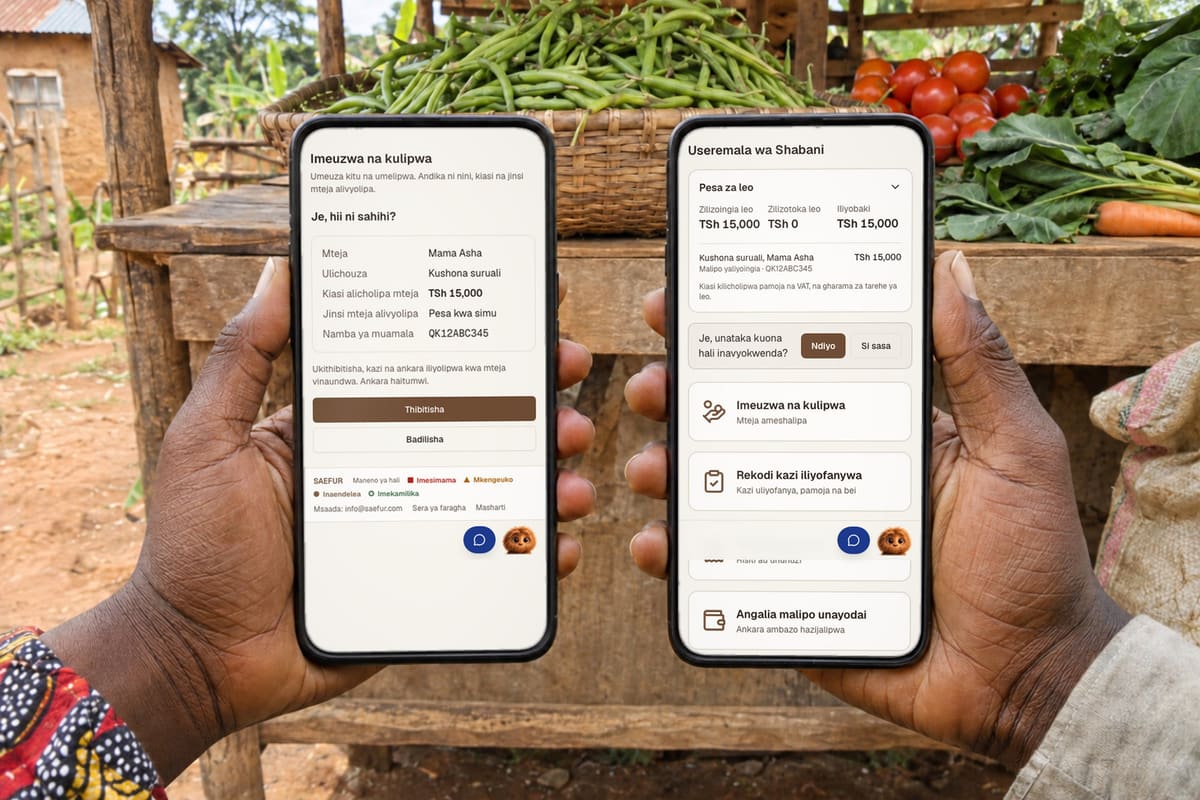
Record a mobile money or cash payment with its transaction code, and see what is still unpaid.
Simple on a small screen
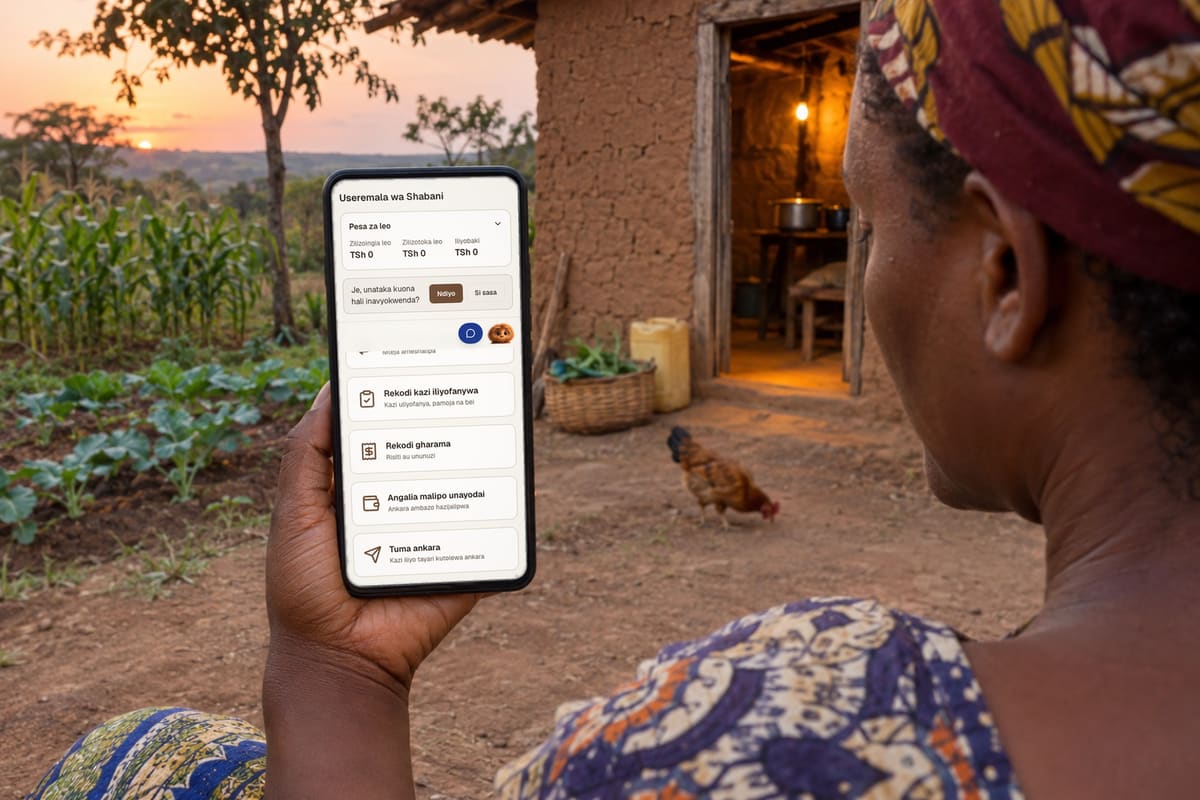
Simple mode shows large buttons for the daily tasks: record a job, note a cost, send an invoice and see what is still unpaid. Everything else is one tap away under More, and you can switch simple mode off at any time.
Made for your country
Each country has its own currency, VAT rates, tax identifiers and public holidays: shillings in Tanzania, Kenya and Uganda, francs in Rwanda and Burundi.
Your fiscal receipt stays where it is
SAEFUR does not replace your EFD, VFD, eTIMS, EFRIS, EBM or eBMS device or system. You issue the fiscal receipt there as before and write its number in SAEFUR, so it stays with the invoice.
Next step: a direct connection to the fiscal systems and automatic mobile money payments are planned as a later phase. They are not available today.
Through a programme
Businesses join SAEFUR through a programme run by an organisation, such as a bank, a business association or a development project. The organisation pays for the places, trains the businesses with a local partner and follows how the programme goes. It sees only what each business chooses to share.